|
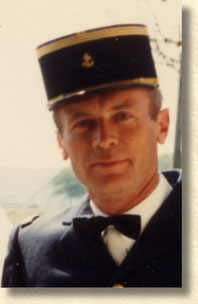
THIS IS THE SAD AND TRUE STORY OF AN ESCAPED And SAFE FRENCH CAJUN By Baron Bruno de Chillaz
Note: It is with deep regret that we learned
that Bruno passed away peacefully on August 26, 2014. Here is a link to his
memorial. Gentes
Dames et Gentilshommes, Ladies and Gentlemen, I am trying to have a look at my
family history. Click here to listen to Bruno’s music. NOTE: After viewing
Pictures highlighted below, click on the arrow <- “Back” to return to this page. Looking first for a hero: I chose Pedro de MARIGNY de
MANDEVILLE (June 15, 1751 - May 14, 1800), buried in Saint‑Louis
Cathedral in New Orleans, near St‑Francis altar, with his father and
grandfather (a complete collection of true certificates has established the
proofs of direct lineage, except my own birth certificate, see below why). Pedro married Miss Jeanne Marie d'Estrehan (today Destrehan) who lived
in the superb and well‑known plantation of Destrehan, near This plantation had been before a property of a related family: the
Robin de Logny family. The Jeanne Marie's father was the hated General Treasurer of Jeanne Marie brothers' were Jean‑Noel, American Senator (l812),
and Jean‑Baptiste d’Estrehan Jr. who married Miss Felicity de Saint‑Maxent.
His widow married later Count Bernardo de Galvez, who became Vice‑King of
Mexico and they had a daughter: Guadalupe. THE FACTS: Pedro de
Marigny de Mandeville, Musketeer of His Very Christian Majesty the King of
France Louis XV and Knight of the Royal and Military Order of Saint Louis,
enlisted in the "Compagnie de la Marine", campaigned against British
troops in Ft‑Bute of Mandchak, Baton‑Rouge (l779), LaMobile
[Mobile] (l780). He was Spanish Governor Bernard Galvez's aide‑de‑camp
at the siege of Proofs: Spanish
military archives, stored in "Archivo General de la India"‑
Papeles procedentes de la Isla de Cuba, legajo 161‑a, in On Galvez recommendation, Pedro settled Spaniards from Canary Islands on
his own plantation (La Terre aux Boeufs) and around Pedro lent the Duke of Orleans (who became later King Louis‑Philippe,
King of the French) 1,000 piastre‑fortres, when he visited him in ABOUT PEDRO'S ANCESTORS: Pedro's great‑great grandfather was: Pierre PHILIPPE, Sieur de
Marigny, from a village named Marigny, near OMAHA beach, destroyed while D Day,
June 6, 1944, today included in the village of Longues‑sur‑Mer,
France, Normandy, France, sp. 1638: Chretienne Souart, from St‑Sauveur,
near Bayeux, Normandy, France, furs merchant, ennobled Dec. 1654. He fought
against Iroquois Indians. Pedro's great‑grandfather, Pierre PHILIPPE's son, was Jean‑Vincent
PHILIPPE, Sieur du Hautmesnil [area now included in Montreal, Canada],
sp. 19‑1‑1671 St‑Symphorien de Pedro's grandfather was Jean‑Francois PHILIPPE, Sieur de Marigny
et de Mandeville, b. 21‑6‑1685 in Montreal, d. 24‑10‑1728
New‑Orleans, buried in St‑Louis Cathedral, New‑Orleans, sp.
1720 in LaMobile, Louisiana: Madeleine Lemaire (Pierre & Marguerite
Lamothe) from St‑Sulpice, Paris. Widow, she m. 1729 Jean‑Francois
Broutin; Jean‑Francois went to Pedro's father was Antoine
Enguerrand PHILIPPE de MARIGNY de MANDEVILLE, born PROBLEM: Simultaneously, 1781, another of my great‑grandfather,
Count Francois Joseph Marie Henri de Viry (direct lineage with proofs), MONTAGU, John (4th Earl of Sandwich) (l 718‑92), politician and
naval administrator. A member of the ' Count of Viry’s and Augusta Sandwich’s daughter, Laure de
Viry married Marquis de Ville de
Ferrieres, from Savoy, wounded by a Russian sword through the head
and shot by a Russian bullet at the
battle of Berezina (sometimes called Borodino), Russia. The French army
enlisted him as a mercenary artillery senior officer. As he was flowing back
with Napoleon’s Grande Armée from His mother was born de Seyssel‑La Charniaz (her see below). THE HOUSE OF SEYSSEL:
The King, later Emperor of Provence, Louis‑l'Aveugle’s [blind]
sons , sp. Adelaide, years’ 901‑928, were: => Boson, Count of => Guiffred, Viscount of **» The House of Faucigny and its junior branch, the House of Thoyre
that died out in Chillaz family, my family. The last daughter, Marie‑Cesarine
de Thoyre, gave her name and her title to my great‑grandfather Baron
Louis Machard de Chillaz de Thoyre, her son. **» The House of Seyssel, Princes of
Orange (so "related" to the House of Orange‑Nassau). Its 9th
branch, the Seyssel‑La Chamiaz branch, died out in de Ville de Ferrieres
family, my direct ancestors (Baron
Louis de Machard de Chillaz de Thoyre ‑ see above ‑ married Delphine
de Ville de Ferrieres. Her paternal grandmother was Jeanne de Seyssel‑La
Charniaz). In the Seyssel senior
branch, Louis de La Chambre‑Seyssel married: A) March 25, 1472,
Jeanne de Chalon, Jean de Chalon’s daughter, Prince of Orange. He took the
title of Prince of Orange. B) Feb. 14, 1487, Ann, Bertrand de La Tour
d'Auvergne’s and Louise de La Tremouille’s daughter. Widow, Ann who had married first Bertrand
Stuart, Duke of Albania, son of the King of Scotland Jack II, from this
marriage follows the relationship with the Kings of France Henri Il and his
wife Catherine de Medicis, and their son Francois II (Sp. Marie de Medicis). A German Prince from Protestants called
William of Orange to help them. He landed to On July 1695, he (William of Orange) assaulted Mr. de Ville de Ferrieres (his mother was Jeanne de Seyssel) and Laure
de Viry (her mother was Augusta Montagu‑Sandwich) had a daughter, Delphine
de Ville de Ferrieres who married Louis, Baron de Machard de Chillaz de Thoyre,
my paternal great‑grandfather, as said above. As a mercenary, he was
Captain Adjutant Major in the Pope's Army (see below) in "Tirailleurs
Franco‑Belges" corps. His own mother was Marie‑Cesarine de
Thoyre, belonging the House of old Barons de Faucigny as said. They had built the House of Thoyre castle
to stop the Arabs, so before the year 730. It’s a ruin to day. Charles Martel defeated the Arabs in According to authentic
patent letters kept by my family, de Chillaz family (my family) had been
ennobled (again) the year before, March 1491. Lord Sandwich had no time to spend for meal (he loved to play cards), so
he used to eat a piece of meat between two slices of bread ("no French
bread, thank you! "). Cook, the famous British discoverer, gave his name
to the So, Lord Montagu
Sandwich is my direct ancestor. He was an interesting Lord: “corrupt, venal,
inefficient” (according to the information given by the British Council in The King of England
demised him, 1782, according to his "success" in Another ancestor, a mercenary, senior officer:
"Oberistwachmeister" ‑ a kind of super‑Colonel, then ‑
Gaspard
Philibert de Machard de Chillaz, born in La Roche, Savoy, according to his
tombstone I saw in Bavaria, died thirty-three years old. He was the Great
Elector Wittelsbach of Bavaria's Great Chamberlain in Another one, Gaspard Philibert's grandson, my great-grandfather Louis,
was officer in the Pope's Army (see above mercenary ‑ battle of That is why I prefer Jacques de La Livaudais, another direct ancestor
from Their son, Jacques (sometimes named Jacques‑Julien, or Jacques II)
Livaudais, baptized ==> This is a part of a translated text
(from the handwritten "memoirs" by Livaudais himself) "1706 ‑ I
was a volunteer to be enlisted as a corsair (private), in Saint‑Malo, Brittany,
on board the frigate "Saint‑Michel ‑ Capt. : Mr. Loyette from
Genoa (who became his mother's second husband). 1707 ‑ I did the
same trip with Mr. de La Vigne‑Voisin, (his uncle who was a corsair) and
Dutertre Daniel, on "Le Duc de Bretagne" and "Le Chasseur". 1708 ‑ I went to
1710 ‑ From Vera‑Cruz,
I came back to Cadiz (Spain) where I went aboard "Le Francais" from
St‑Malo as an ensign corsair, Capt.: Mr. Gardin. 1711 ‑ I went aboard
the frigate "La Sainte Avoye",
in 1716 ‑ Employed
in the service of the Occident Company, St‑Malo, I went aboard the
frigate "La Victoire", Cpt.: de Rossel, who was an ensign, to 1718 ‑ The
Company gave me the frigate "Le Prophete Daniel" to ship. I sailed it
to 1720 ‑ The
Indies’ Company Managers sent me as a fist Lt. to sail to 1721 ‑ October
3, anchors cast in 1724 ‑ I was the
commanding officer on the "L'Hirondelle" frigate from St‑Malo
to 1726 ‑ They
named Mr. Perrier Commandant General of the Mr. de Verger,
engineer, commanding La Balize forces gave me an order from Mr. Perrier and Mr.
de La Chaise, Directeur, to leave "L'Hannibal" and take over the
command of the store ship "La Loere":
the crew had been mutinying against its commanding officer and Lt. I
sailed it to New‑Orleans. 1728 ‑ I was in
La Mobile with Mr. Perrier where I had contacts with the Commissaire of
Pensacola. I heard there were many cattle in "British soldiers
from North Carolina laid siege to Saint‑Augustine from land, helped with
Indians or "savages", and locked the way in and out the port with a
18-guns British frigate that stopped vessels sent from Spanish Havana city
(Cuba) to help the city of St. Augustine. "I suggested
Governor to open myself the way. He agreed. With two pirogues (long small boats
used by Indians), I made a platform on which I put an 8-pounder cannon. I added
sixteen oars. I went by night to 2/3 of the range of my cannon and began to
fire while the sun was raising. At the third shot, the
mooring lines were broken and the frigate left the coast with the help of the
wind blowing from land". St‑Augustine Historical Society confirms: Suj : family history Date: Best regards from And another message: Sub.
: Re: Jacques Livaudais Date: Bruno, in response to your query about your relative, here's what I've
been able to find. The In 1728, Col. John Palmer carne down from North Carolina to attack St.
Augustine in an overland raid that was a part of an undeclared colonial war
between Spain and Britain, where both sides were for the most part using Native
American surrogates to conduct the actions. Palmer had about 300 militia and
Indians on the 1728 raid. So far I've found no mention of a naval element to
this raid, but it isn't unlikely that a small vessel of 18 guns might not have
been a part of the raid. "We brought back
cattle to So I decided to go
back home, through the savage nations Abecas, Cajiutas, Talapas and Alibamon
and reached 1729 ‑ Trip on
the brigantine "La Fauvette" to Vera‑Cruz (June 15th ‑
August). 1730 ‑ I visited
Barataria (Barataria is a village south to 1731 ‑ I went to
La Balize to wait for Mr. Perrier, Mr. de Salvert, commanding officer of the
store ship "La Somme" and the Troupes de la Marine battalions. I came
back to I sailed to one league
from the Fort we were assaulting. Mr. Baron de Crene, commanding troops and
camp where were stored ammunition and food, was gone to the assaulted fort, Mr.
Perrier gave Mr. de Crene a written order to take over the command instead of
him. We took the fort with 600 Indians, men, women, children. They embarked the
main chiefs on the ship that I sailed back to the city. I sailed over the mouth
of the river. 1732 ‑ I
shuttled back and forth to Chandeleur Islands to save sailors of the King of
Spain frigate "La Vigilante", Cpt.: Don Joseph de Pio, who was lost
because of a storm 1733 ‑ I took
over the command of the King's ship "Le Saint‑Louis" to Vera‑Cruz.
We embarked eighty Spaniards. I reached Vera Cruz the 5th day. The 10-day trip
surprised Marquis de Casa Fuete Viarray. This man paid the debt to 1733 ‑ I
received the order to sent to 1734 ‑ I got
promoted captain of the 1735 ‑ As I was
the commander of the King's ship "L'Aigle Noir", I tried to attack
two traitorous British ships in La Mobile bay. The British were alerted when I
left the port. So I did not find any of them. I came back, very sorry in 1736 ‑ I prepared
all the fitting out of the ships of the army to assault these Indians using La
Mobile River. I did this campaign. 1738 ‑ I was
patented as a store ship Capt. 1739 ‑ I sailed
the King's store ships "La Somme", "La Charmante" and
"L'Atlas", Cpt.: Mr. de Villere, de Bertoville and de Querlore. I
campaigned during Assumption against Chicachas Indians. 1740 ‑ I went on
a row boat to visit west part of 1740 ‑1745 I
used to sail in and out the port the Kings ships without any accident. Sailing
out the store ship "Le Chasseur", Cpt.: Pouillade, I found a merchant
ship "Le Gaillard" from 1746 ‑ The channel
of La Balize was too sandy, so I used the new pass to, sail in the King's
frigate "La Matine", Cpt. M. Keslin. 1747 ‑ I sailed
in down the river and sailed out the King's frigate "La Megere",
Cpt.: Keslin, we visited south east and east passes with Mr. de Vaudreuil,
Govern Normurin (?) Commissaire General. 1749 ‑ "Le
Marquis de Vaudreuil" vessel, coming from 1754 ‑ I sailed
the store ship "Le Rhinoceros", Cpt.: Mr. de Guillon 1756 ‑ "Le Message" Cpt.: Mr. Marcheseaux.
1757 ‑ I went
aboard the King’s vessel "Le Saint‑Jean" for the trip to Vera‑Cruz
and 1758 ‑ The
frigate "L'Opale" Cpt.: Mr. Chevalier de Plas reached La Balize with
the store ship "La fortune" with "Le Patriote" and "Le
Bizarre" I sailed in the port at night. "La Fortune" and others
came some days later. I sailed the ship to the city where we repaired it. Since Jacques‑Julien was Captain of the He knew the heigh of
the tides and the position of the moving sandy passes. They gave this
information from Jacques-Julien
married Marie Genevieve Babin de La Source from [La] Mobile. His sister Marguerite Pelagie married Johachim
Scimard de Bellisle, from Fontenenay‑le‑Comte, France. As this man
was trying to get a new way through His grandson
Jacques III de Livaudais (sp. Carlota
Chauvin Léry des Islets [or Dessilet]) had a plantation in New Orleans and his
great‑grandson, Jacques IV, went to France in 1788, enlisted in Lafayette
National Guard in Chaussée d’Antin, Paris, took part in the assault of the
Bastille (l 4 juillet (July)1789, the French National day or Bastille Day) as a
National Guard. He was elected Captain 1790. Problem: His election sheet as a
captain mentions: "enlisted about Anyway, It was a good thing because Governor Kerlerec, French Governor
of This Jacques de Livaudais married Marie‑Celeste
de Marigny de Mandeville (both my direct grand father and mother), another
Pedro de Marigny's daughter, see above. Livaudais was the Lt‑Colonel of
the Marie‑Celeste
dropped her husband, sold all her land in New‑Orleans and came to I have been wondering for years if Marie Celeste de Marigny, my
ancestor, was related to Abel de Marigny. This architect built the Palais de
L’Elysée, the residence of the President of the Pauline Stephanie de Livaudais (father : Jacques de Livaudais, above, mother: Marie Celeste de Marigny), married Daniel Hippolyte du Suau de La Croix, from Saint Bernard Parish, Louisiana. The Marigny family from
Their son Emmanuel
Henri Frederick Enguerrand du Suau de La Croix married Adeline
Aubert de Vincelles. According
to the Aubert de Vincelles family: one of their ancestors, Thomas Aubert, went
to Their daughter, Odette du Suau de La Croix married Marquis Moisson
Mareschal de Monteclain, descending from King Louis XIV's surgeon, who created
the King Louis XIV had a bad leg because of gangrene. He chose his doctor
Guy Fagon's talent to treat him. Some people say: if he had used the Marquis
Mareschal de Bievre’s competence (an Irish barber named Marshall and
official surgeon): King Louis XIV would be still alive . . . Possible! Their daughter is my maternal grandmother. She married a man whose
mother used to wait his husband with his true and superb French uniform in the
Molsheim ( The most famous de Marigny is Marie‑Celeste's brother, Bernard
de Marigny de Mandeville, my uncle, who founded the city of Some people said he killed at least nineteen persons in dueling (he used
swords. In d'Estrehan family they preferred whale harpoons. His teacher was his
excellent friend Jean Lafitte (legal profession: a pirate) and he is
supposed to have had a friendship with David Crockett (from a French
"Huguenot" family, named de Croquetagne, who settled in Bernard de Marigny obtained the help from Baratarians and from his
friend Jean Lafitte before the famous Battle of New Orleans (1814‑1815). The
British Navy tried first to buy Laffite's fleet (1000 sailors, more than
fifty stolen vessels) to defeat the Americans. Finally, Lafitte and Marigny
joined U.S. General Jackson. Lafitte told the British he would not help them. They regarded Bernard
as "the richest man in From the Internet: St. Bernard Parish ‑
LA ‑ Researching Name: Bernard deMarigny Email
of Researcher: Donald deMarigny Comments: How much money did he lend to the Bernard de Marigny de Mandeville's son, Jean Philippe, married Sophronie
Claiborne, daughter of the first American Governor [they changed her name in
the French version of the Cecil B.
DeMille film, "The Buccaneers", starring Yul Bruyner and Charlton
Heston]. Lafitte was not an one‑eyed pirate. Here is the proof: he
had one eye screwed on his spyglass and the other one on the pretty low necked
Sophronie Claiborne. Jean Philippe's sister, Marie Rosa de Marigny married Francisco de
Santemanat, Spanish officer, Governor of Tabasco, Jean
Philippe's daughter, Marie‑Suzette, married Philip Evan Thomas. Their daughter,
Suzette de Marigny‑Thomas married William Cornelius Hall. Their daughter, Suzette de Marigny‑Hall, married Charles Dewey, US
Senator, the favorite Republican candidate's cousin for the US Presidential
elections of 1948 ‑ Republican Thomas E. Dewey, first Attorney
General (he fought the mafia: see Lucky Luciano, Al Capone, The Untouchables
and Elliott Ness), then New York State Governor, then beaten by Harry
Truman as a President of USA (1948) At
the end of WW2, as liberating US General Lucian Truscott was about to reach
Sorans Castle, my mother's castle in Franche‑Comte, east of France, they
parachuted an officer into the park: he was Colonel Peter Dewey, Cincinnati,
Charles' son and Thomas Dewey's nephew. He wanted to see his cousins (my mother) and did not know the
Germans were in the woods all around, clearing off. Seeing the flow of battle turning against him, the German general who
used the castle as his headquarter for the duration of the war, entered the
living room and said "Excuse us for the disturbance, bye, bye!". U.S. General Truscott
made his HQ there with 5,000 soldiers! Colonel Peter Dewey ( About Dewey family: Charles S. Dewey is a distant relative (in fact, Charles S. Dewey was
Thomas E. Dewey's uncle (13th
degree). The Dewey Family in the Both Charles and Thomas are from the Josiah. The lines are as follows to the settler: Charles Schuveldt Dewey: Albert B. Dewey and Louise Schuveldt Chauncey Dewey and Nancy Pritchard Eliphalet Dewey and Rachel Ann Hyde Daniel Dewey and Temperance Bailey John Dewey and Experience Woodward Josiah Dewey II and Mehitable Miller Josiah Dewey and Hepzibah Lyman Thomas Dewey, The Settler. Thomas Edmund Dewey George Martin Dewey II George Martin Dewey and Emma Bingham Granville Dewey and Harriet Freeman Martin Dewey and Hannah Waterman Elijah Dewey and Agigail Martin William Dewey and Mercy Bailey Josiah II Josiah Thomas, The Settler They published the Dewey Family History in 1898 to commemorate the naval
victory of Admiral George Dewey (also from Josiah) over the Spanish Navy
at The
Dewey family finds its roots in the city of Another, Ernest de Marigny, took a financial partnership with the Duke
of Windsor (married to American divorced person Wallis Simpson) and an
American millionaire, Mr. Oakes, to create casinos in Paradise Island in Nassau
‑ Bahamas (Windsor had been a Nazis’ friend and Bahamas Governor
during WW2). Marigny married Oakes’ daughter- this is not really a fairy tale - and
someone murdered Oakes sometimes later. Marigny was suspected of being the
murderer. Later, the Duke admitted having hired American private investigators
to make faked proofs so that Marigny would go to jail (there are many books
about that story). When two cousins are fighting: grandfather judges and makes peace. Why
didn't they contact me to find a solution? That is the question. During a period of more than 1,000 years, they were only two really
regular (I mean neither mercenary, nor a corsair, nor a pirate, nor even a cow
boy) Army officers: my father and me! My father, Baron
Pierre de Chillaz, born 1913, was an officer in the French light calvary (with
horses). Issued from St‑Cyr (our West Point) school, he became
an officer in 1936 and chose the 1st Regiment of Moroccan Spahis ( In June 1940, everyone regarded the war organization as
"perfect". The German Siemens Society electrified the French Ligne
Maginot to protect the country from German army. Everything was right. Here is the proof: they sent him with his squadron
and horses to The exodus of civilians on the roads steered him away from the Stukas
Messerschmitt aircraft machine guns. He only heard the sirens as the aircraft
dove and began shooting at the civilians. Later in his life, Father, always the incorrigible hunter, forgot this
part of tragic history, but he remained nostalgic for the deers that he saw in
the woods. His squadron was forced to ride in the woods along the roads blocked
off by the civilians refugees. Defeated, The French Gov. dissolved the French army. They divided Father left the army and went to the Once, Nazis arrested him and they sent him to the east of In
this freight car was a man with a skimmer in his haversack. The prisoners used
this skimmer to untwist the wire through the cleft of the door, using the holes
of the skimmer. Only my father and one other man jumped out. Father returned to Some days later, a German officer went to my grandmother's house, his
mother who lived in Palaiseau, near Immediately, German soldiers came with tools and began to dismantle my
grandmother's staircase, step by step! By a warm evening in early June 1944, my father, accompanied by men who
belong to the resistance, rode a bicycle to a drop zone near the Father chose a submachine gun ‑ a famous British Sten called
"tommy‑gun" without any bullets ‑ and some hand grenades
from the British parachuted containers. He then led the convoy back to the
secret weapons’ storage dump. Before crossing on their way back to the Riding his bicycle, my father reached the village square. There were
several outside cafes where German soldiers from "SS Das Reich"
division were drinking. It was very warm. Their weapons were on the ground. The
old church of the village was on the right. As he biked down a slope road, a German soldier who guarded the center
village square spotted and stopped Father. This guard armed with a rifle asked
my father for the password. My father had forgotten the ammunition for his submachine gun (and
did not know how to use it!) He could not reach his useless hand grenades
on the bike rack. Instead, he grabbed and raised his bicycle by the frame pulling
it over the head and down to the waist of the soldier. The bike’s frame pinned
both of the soldier’s arms as the bicycle also drove into the middle of his
back. Then
all the SS infantry company soldiers who were drinking, took up their rifles
and submachine guns and began to shoot at my father who ran on all fours,
rolling on the ground, around the village place to exit and escape. Today, one can see these three foot high bullet holes in each house and
in the wall of the old church. Father escaped, in the night to return to his father‑in‑law's
house, one mile from there on the road to the The next week, the "SS Das Reich German" soldiers burned the
neighboring In I was two months old and was buried in a dunk heap. Today, I still smell
bad! I
got a false birth certificate: "Father occupation: agricultural
engineer" instead of "cavalry officer". He was really prudent! My great-grandmother was Mrs. Kling. She lived in the Alsatian town of Mrs. Kling married a French officer (a real one, as she used to say.) She was the heir of "La Manufacture
Royale d'Armes de Klingenthal" (a then famous sword factory.) Thus, she was a very wealthy person. Because she did not like to live in the garrisoned cities, she settled
in her castle in Molsheim. Stationed in When it reached the Franco‑German border, the train would stop at
the exact same check point every time. This stop was in a desert area far from
any train station, village, or town, on the Franco‑German border. It was there that the trains entered At that isolated point three German soldiers would wait along the tracks
for the train's arrival so that they would replace the three French soldiers
accompanying Mrs. Kling's husband (“one man for the two horses, two for the
officer.”) The Germans were keeping
proper track of the whereabouts of the French Lt‑Colonel, her husband. My mother also told me the following stories: When she was a young lady, Mrs. Kling had a friend named Ernestine
Habernickel. This lady married a German officer: Captain Domeyer. Accordingly,
Mrs. Kling was no longer allowed by her parents to see her friend and that made
her very sad. Years later, on All Souls' Day, November 2, my mother, her grandmother,
and the driver would go to the cemetery in Molsheim. There, Mrs. Kling would ask the driver, Mr.
Gustave, to put flower wreaths on the five family tombs. When this was done, Grandmother Kling would invariably say: "My
God, I forgot my friend!" She would
then turn to the driver: "Gustav, are there anymore wreaths left in the
car?" "Yes,
Madam," he would always reply. Gustav would then put a superb wreath of flowers
on her best friend's tomb. Then, grandmother Kling would also suddenly remember her friend’s
husband: "Oh, my God, I forgot that stupid German officer! Nobody ever
thinks of him!” "Gustav, is there
another wreath in the car?" "Yes,
Madam!" "Please put it on
that tomb!" It was the same
scenario every year and she always had the right amount of wreaths in the car! Then a wall divided the cemetery in Molsheim into two areas. Thus, it seemed to my mother that they buried
Ernestine Habernickel and her husband very close to one another: they buried
the wife in the Roman Catholic side, and they interred her husband in the
Protestant side of the wall. When I visited the cemetery, fifty years later with my mother, there was
a little sign on Ernestine Habernickel's tomb. It said: "The Family must
repair this tomb, or we will remove it." My mother said to me: "I
must pay for the repair." As she was walking to Cpt. Domayer's tomb – the
German officer – she saw the same sign on his tomb. My mother said, "I
must pay for him too. Nobody thinks of him!" Later in the car, to carry on
a family tradition, Mother said, "We will never finish with that stupid
German officer!" Mr. Ettore Bugatti and Mr. Marco, his first engineer, often visited Mrs.
King. Mr. Bugatti was the famous car builder. He lived in a superb castle very
close to Mrs. Kling's castle in Molsheim.
She did not want one of those automobiles "without a running
board" and "not high enough to sit with a hat with straight feathers
without tilting the head!" Mrs.Kling had eleven house workers, and her cabman was named Johan
Sebastian Bach! At the beginning of WW II, a German general came and told Mrs. Kling he
wanted to use her home for the "Komandantur" (Headquarters of the
German Army.) My great‑grandmother
told him she was sorry but this could not be so because during WW I, the place
had a VIP and "higher class" guest: the Kronprinz, German Kaiser
William II's son. She explained that the Kaiser's son and old Marshal Hiddenburg used to
play cards very late in the evening, and they were so drunk that they were
never able to go to the restroom to relieve themselves. Upon the general's dubious look, she invited him to follow her into the
living room. She stopped in front of an
armchair and said, "Look and smell it by yourself! Do I lie?" She pushed the general who fell nose first
into the seat cushion! The following day, with the agreement and help of the local population,
they burned all her books from her library in the center of town, except the
leather kept for the German army. They hanged her dogs (mixed dogs and
wolves). All her lands in sixty‑two
parishes and her castle were confiscated in the name of the 3rd Reich. So, one of the biggest farms in Nazis then deported Mrs. Kling to However, she was happy because she had left the key of her safe on it to
be sure to find it whenever she would return home, and she also wrote the
combination on its door. Prudent and
wise, was not she? She died 1942 and had been buried in the chapel in Sorans, her son's
castle. As fate would have it, Allied forces destroyed the What a deadly boring
family! Heroes are tired, even
Daddy Sandwich!
"Laisse le bon temps rouler..."
Votre très humble et très dévoué Serviteur, Bruno de Chillaz |